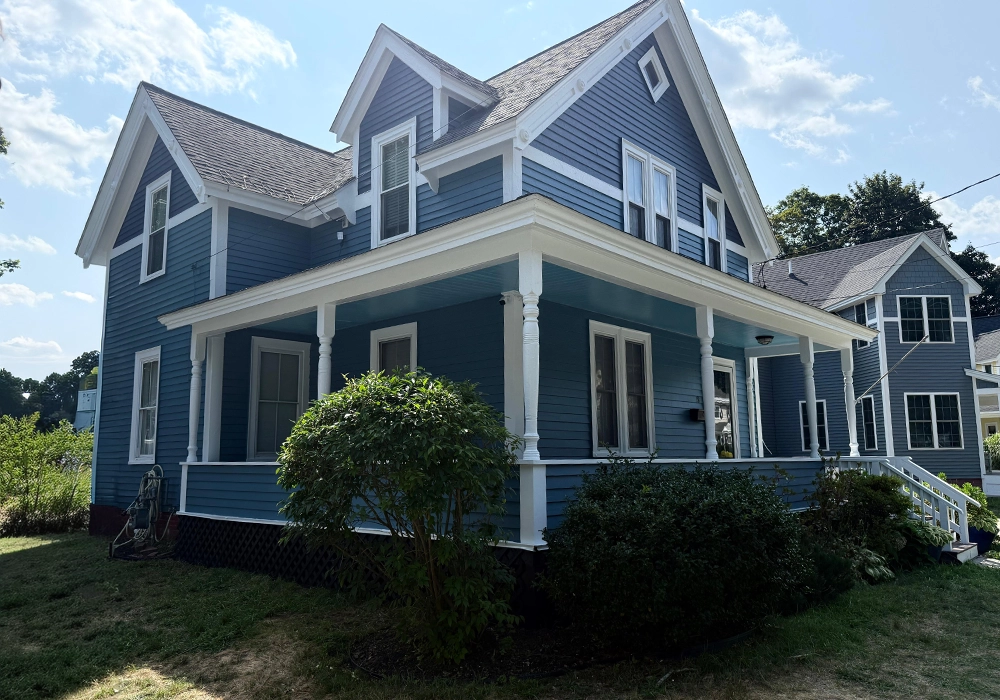
Peeling, cracking and flaking paint is one of the most common problems we see on homes in Leominster, Fitchburg and across Worcester County. The good news: peeling almost always has a clear cause, and once you fix the cause, a new paint job can last 8–10 years instead of 2–3. Here is what is really going on with your siding and trim.
Exterior paint peels on New England homes mainly because of:
- Moisture getting behind the paint (ice dams, gutters, bathrooms, missing caulk)
- Poor prep: painting over dirt, chalky paint or loose layers
- Wrong conditions: painting when it is too cold, damp or in direct hot sun
- Old paint layers that have lost their bond to the wood
6 reasons exterior paint peels on Massachusetts homes
1. Moisture from inside the house
Steam from bathrooms, kitchens and laundry rooms can push through walls that lack a good vapor barrier, common in older colonials and capes. The moisture lifts the paint from behind, creating bubbles and peeling, often right outside the bathroom.
2. Ice dams, gutters and roof runoff
Our winters create ice dams that send water behind fascia and down the siding. Clogged or leaking gutters do the same in spring and fall. If peeling is worst under the roofline or near downspouts, this is likely the cause.
3. Paint applied over dirt, mildew or chalk
Siding that is not washed before painting leaves a layer of dirt and chalky old paint. New paint sticks to that layer, not the wood, and it lets go within a few seasons.
4. Painting in the wrong weather
Cold nights, morning dew and late-day humidity in New England can ruin a fresh coat before it cures. Paint applied in hot, direct sun can also dry too fast and fail to bond.
5. Too many old layers
Homes built decades ago may have many coats of paint. Eventually, the bottom layers lose their grip and the whole stack cracks and lifts.
6. Bare wood left unprimed
Spots that were scraped to bare wood and painted without primer absorb paint unevenly and are the first places to fail.
Many homes in Leominster, Fitchburg and surrounding towns were built before 1978 and may have lead paint in older layers. Do not dry-scrape or power-sand peeling paint yourself. Scraping should follow EPA lead-safe work practices.
What the type of peeling tells you
| What you see | Likely cause |
|---|---|
| Bubbles or blisters | Moisture from inside, or paint applied in direct sun |
| Peeling down to bare wood | Moisture behind the siding or no primer |
| Alligator cracking | Too many old layers or incompatible paints |
| Peeling under roofline & gutters | Ice dams, gutter overflow, roof runoff |
| Powdery “chalk” on your hand | Old paint breaking down; needs washing and priming |
Seeing peeling on your siding or trim? We will inspect it, find the cause and send a written quote, free.
Get a Free QuoteHow we fix peeling paint so it does not come back
A long-lasting exterior is 70% preparation. Our process typically includes:
- Inspect and find the source. Gutters, caulk, flashing or interior moisture are fixed or flagged first.
- Wash the house. Gentle pressure washing removes dirt, mildew and chalk.
- Scrape and sand all loose paint, feathering edges so they do not show through.
- Repair the wood. Rotted clapboards, trim, sills and fascia are replaced by our carpentry team.
- Prime every bare spot with a primer suited to the surface.
- Caulk joints around windows, doors and trim to keep water out.
- Apply two finish coats of premium exterior paint in the right weather window.
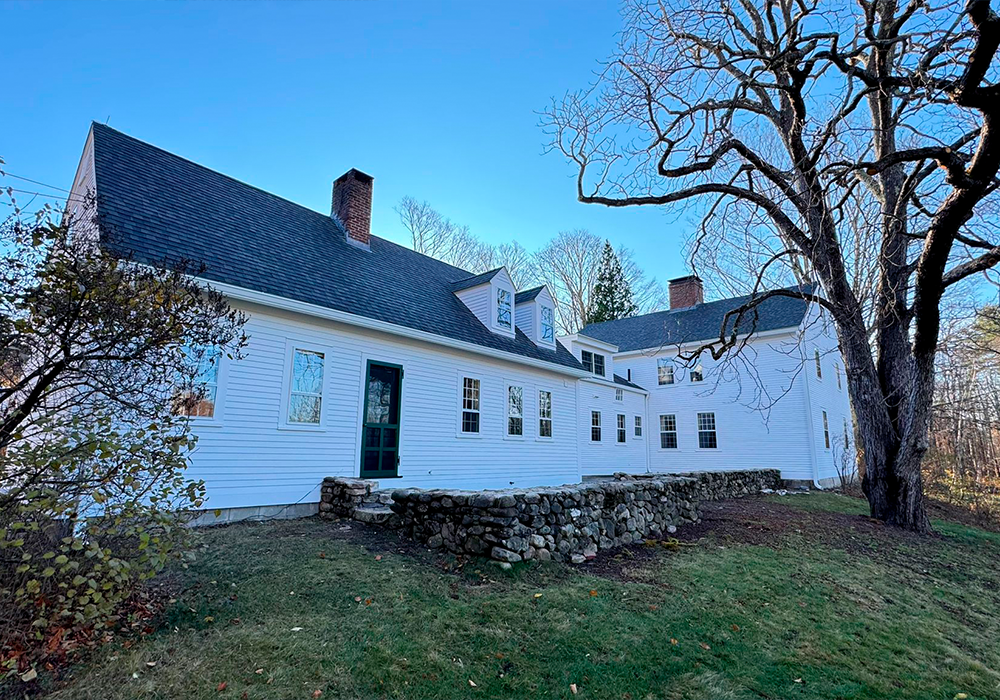
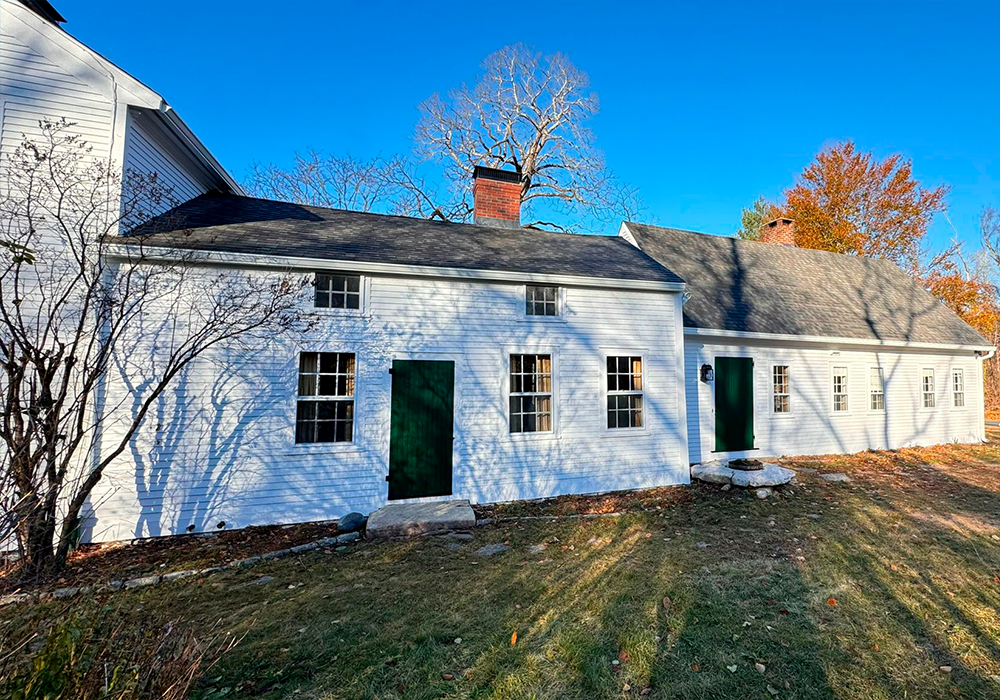
Before & after: a real Central MA project
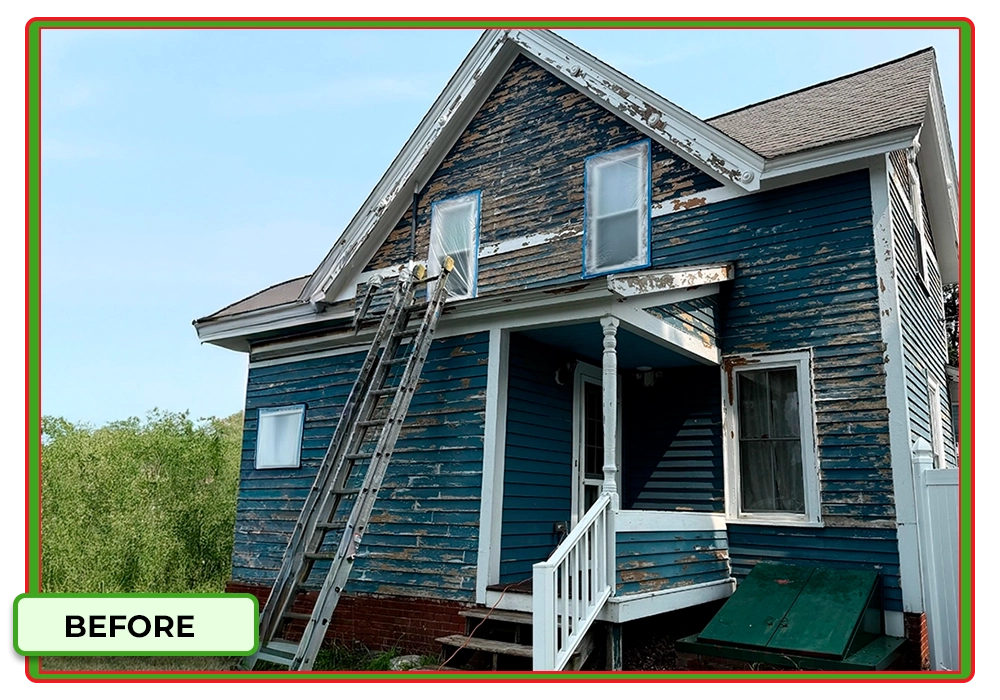
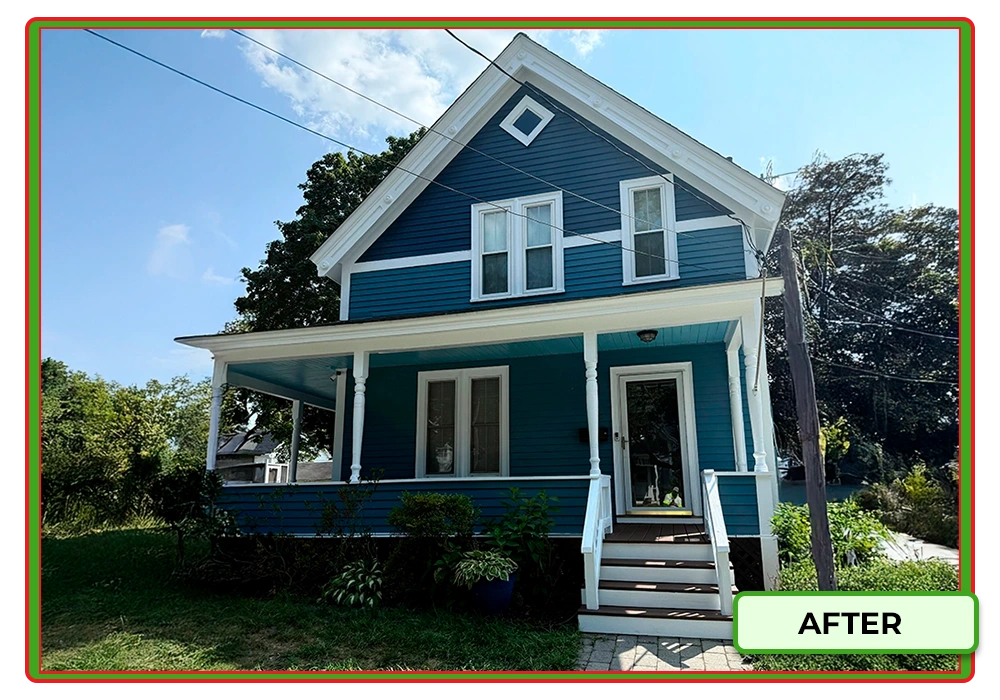
Project by Essential Painting Company, North Central Massachusetts.
When is the best time to repaint in New England?
In Central Massachusetts, exterior painting generally runs from late spring through early fall, when temperatures and humidity stay within what the paint manufacturer requires. Late May through September is usually the sweet spot, with early October workable in mild years.
Peeling you notice in the fall is the perfect time to get an estimate. You lock in a spot on the spring schedule before the rush, and we can often seal the worst areas before winter.
What happens if you wait
- Water reaches bare wood and starts rot in clapboards, trim and sills.
- Small carpentry repairs turn into larger ones.
- Prep time (and cost) grows every season paint keeps failing.
- Curb appeal and resale value drop.
Painting a house in good condition is always cheaper than painting a house that needs repairs first.
Frequently asked questions
Can you paint over peeling paint?
No. All loose paint must be scraped and sanded, and bare areas primed. Painting over peeling paint only hides the problem for a short time.
Why is my house paint peeling after only 2–3 years?
The most common reasons are poor prep (no washing, scraping or primer), moisture behind the siding, or paint applied in the wrong weather.
How long does exterior paint last in Massachusetts?
With proper prep and quality paint, a professional exterior typically lasts 7–10 years. South-facing walls with full sun may need attention sooner.
Is peeling paint on an old house dangerous?
On homes built before 1978 it can contain lead. Avoid dry-scraping or sanding it yourself and hire painters who follow lead-safe work practices.
Do you repair rotted trim before painting?
Yes. Our carpentry team replaces rotted clapboards, trim, fascia and sills as part of the exterior project, so the new paint goes on solid wood.
Get your exterior inspected, free
We will find what is causing the peeling, fix the source and give your home a finish built for New England weather.